

Investment Wisdom
EntrepreneursBreak article: Ed Rempel on Why Free Markets and the Stock Market Build True Wealth
I was recently featured in EntrepreneursBreak discussing why I believe free markets and the stock market have been such powerful drivers of prosperity and long-term wealth. In the article, I look at: One thing I’ve seen repeatedly after looking at the complete finances of thousands of Canadians: people who build significant wealth usually own productive…
Read MoreShould You Pay Off Your Mortgage Early or Invest Instead?

For many Canadians, becoming mortgage-free as quickly as possible feels like an obvious financial goal. But I think there’s a more important question to ask first: Once your mortgage is paid off, what percentage of that former mortgage payment will you actually invest? I call this the 95% test. If you pay off your mortgage…
Read MoreiWatchMarkets article: Ed Rempel, CFP, Explains Why Self-Made Dividends Are Better Than Ordinary Dividends, In Every Way

Most investors think dividends are one of the safest and smartest ways to create retirement income. But are they really? Ordinary dividends have some significant drawbacks that are often overlooked: There’s another option: self-made dividends. Instead of relying on companies to decide when and how much income you receive, you create your own cash flow…
Read MoreWhy Economic Freedom and the Stock Market Make Us All Richer
As equity investors, we put our money into companies through the stock market because we believe in the power of innovation, competition, and long-term growth. But for the stock market to deliver strong returns over time, we need economic freedom and free enterprise. When people can freely start businesses, invest, trade, hire, and compete without…
Read MoreStay Invested – Your “Behavioural Vitamin C” to Build Real Financial Freedom

As we hit the halfway point of 2026, it’s the perfect moment to step back and talk about what really builds lasting financial freedom: staying focused on your long-term plan amid all the noise. Think of your financial plan as the GPS for your life. It’s not a dusty document – it’s a dynamic, living…
Read MoreGet Financial Freedom Tips Article – Rethinking Retirement: Why Ed Rempel Backs a 100% Equity Strategy for Life

For decades, the bedrock of mainstream financial planning has been built on a comforting, two-part rule: diversify your wealth between stocks and bonds, and steadily shift toward the safety of fixed income as you grow older. But according to Toronto-based veteran tax accountant & fee-for-service financial planner, Ed Rempel, this time-honoured tradition might actually be…
Read MoreNational Post article: Does this 84-year-old suffer from the ‘Multimillionaire’s Dilemma?’
Louise (not her real name) has far more money than she is ever likely to spend. She has always invested in equities and is comfortable with them. However, now at age 84, she is wondering whether she should invest more conservatively. This is a case study about the “Multi-Millionaire’s Dilemma.” Louise says: “Many of my…
Read MoreFinancial Independence, Retire Early: The Math Behind the Viral Money Movement
Every week, someone tells me they want to retire by 40. My first question is always the same: why? The FIRE movement promises freedom decades earlier than traditional retirement. Online, it’s often presented as a fairly simple formula: save aggressively, invest consistently, and escape the workforce early. But in Canada today, is FIRE actually realistic…
Read MoreMoney PIP article: Why Does Retirement Feel Uncertain – Even with a Large Portfolio?

Many Canadians with $1 million or more saved for retirement still feel financially insecure. I see this all the time. People work hard, save consistently, invest for decades, and build substantial portfolios, yet still aren’t sure they can retire comfortably. In many cases, the issue is not a lack of money. It’s a lack of…
Read MoreDon’t Let Today’s Headlines Wreck Your Retirement
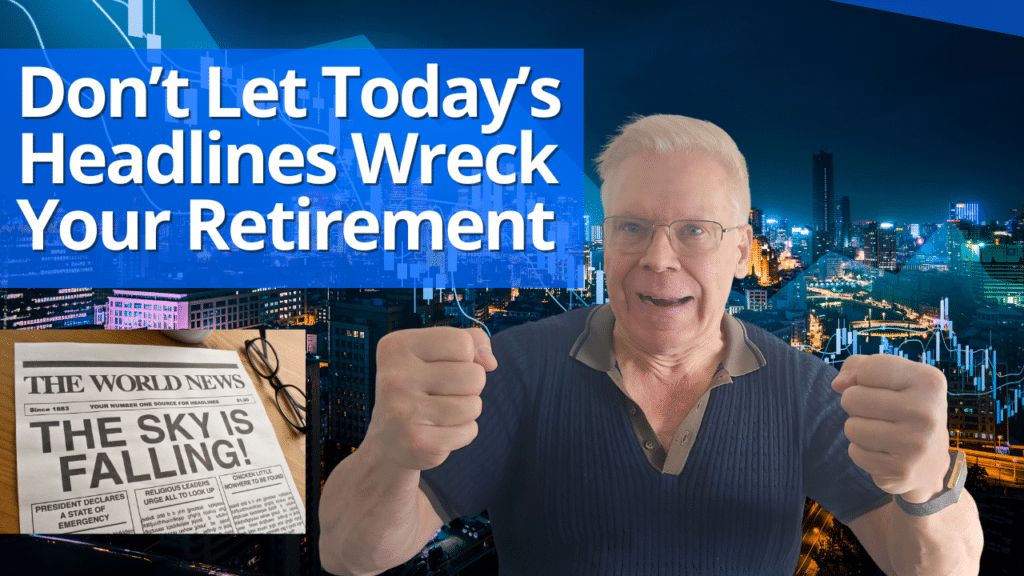
Gas prices are up from about $1.30/litre to $1.75/litre across Canada this year. There is conflict in Iran. Markets are reacting to geopolitical uncertainty once again. So what should investors actually do during times like this? Should you move more conservative? Or is reacting emotionally what hurts investors most? In my latest video, podcast episode…
Read More